
AI Voice Cloning and Fake Branding
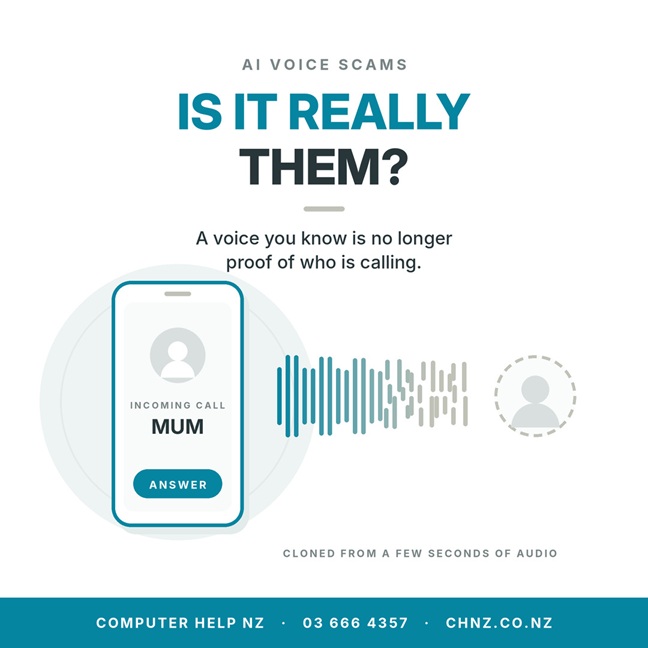
That phone call from your child? It might not be them.
Here's a scene we're hearing about more and more. The phone goes at ten at night. It's your daughter. She's crying, talking fast, there's been an accident, she needs money sorted right now and please don't tell Dad. It's her voice. The way she says your name. You'd know it anywhere.
Except it isn't her. It's about thirty seconds of audio lifted off a Facebook video, run through a free AI tool, and read back to you by someone in another country who has never met your family.
Of all the things worth worrying about this year, this is the one we'd put at the top for home users - because every piece of scam advice you've ever been given was about reading. Check the spelling. Hover over the link. Look at the sender's address. None of that helps you when the scam arrives in a voice you love.
IT ONLY TAKES A FEW SECONDS OF "YOU"
Voice cloning used to be a lab trick that needed hours of recordings. Now the tools are free, they run in a web browser, and they need very little to work with. A short clip will do it.
And most of us have handed over plenty without thinking twice: the birthday video on Facebook, voice notes in the family group chat, a wee intro clip on the company website. None of that was a mistake. But it does mean a familiar voice is no longer proof of who's calling.
THE NUMBERS AREN'T SMALL
This isn't a far-off overseas problem. The NCSC recorded $5.7 million in direct scam and fraud losses in New Zealand in a single recent quarter. Research commissioned by Mastercard found around 29% of New Zealanders had been targeted by a deepfake scam in the previous year - about one in ten of them lost money, and another quarter copped identity theft or compromised data.
Put plainly: if you have a phone and a Facebook account, you're in the pool of potential computer scammers.
THE OTHER HALF OF THE TRICK: WEBSITES THAT AREN'T REAL
The same AI tools that fake a voice will knock up a convincing website in an afternoon, and that's the second half of what's going on.
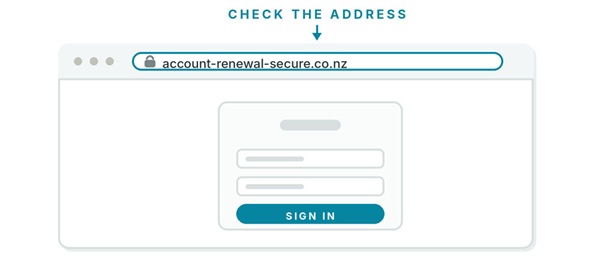
Netsafe has warned about a wave of scams where criminals impersonate domain name providers, hosting companies and other trusted organisations, with fake sites and login pages that look right at a glance. It's a nasty shift: they're no longer just pretending to be a brand, they're copying the dull systems that make a brand feel trustworthy in the first place.
The trap is the same for households and small businesses: an email says your domain is expiring, or a subscription has renewed, or a refund is waiting. You click. The page looks exactly right. You type your password into it.
THE FIX IS LOW-TECH, AND IT'S FREE
The good news is that none of this needs new software. It needs a couple of house rules:
Agree a family safe word. One word, agreed in person, never written down anywhere online. If someone rings in a panic asking for money, you ask for it. AI can copy the voice. It can't guess a word it has never heard.
Hang up and ring back. Not the number that called you, and not a number they give you: the one already in your contacts. Caller ID can be faked as easily as a voice.
Never log in from a link. Open a new tab and type the address yourself, or use the app. If there really is an invoice or a refund, it'll be sitting in your account when you get there.
Treat urgency as the warning sign. Every one of these scams runs on the same fuel: do it now, don't tell anyone, it'll be too late in an hour. Real emergencies survive a five-minute pause. Scams usually don't.
SO WHAT'S THE TRADE-OFF?
Being the person who says "hang on, I'll ring you back" to a family member in tears feels awful. Nobody enjoys it. But weigh that against a thousand dollars gone to an overseas account that your bank can't claw back, and a short awkward pause starts to look pretty cheap.
Have the safe-word conversation at dinner this week. It takes two minutes and it's the single best protection going against a scam no antivirus can stop.
HERE TO HELP
If you've had one of these calls, clicked something you're not sure about, or you'd just like someone to go over your gear and accounts and tell you honestly where you stand, give us a ring. We've been sorting this stuff out for Canterbury families since 1997, back when the worst thing on your computer was a floppy disk someone's cousin brought over.
Computer Help NZ www.chnz.co.nz